Thyroid Conditions
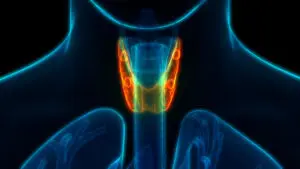
The Thyroid.
The thyroid is a butterfly-shaped gland in front of the trachea on both sides. Hormones T3 (Triiodothyronine and T4 (Thyroxine) are stimulated by the production of thyroid-stimulating hormone (TSH) released by the Pituitary gland.
These hormones help to regulate the body’s metabolism and affect the heart, the brain, mood, muscle, and bone. They impact every part of the body.
Various conditions can occur when the thyroid doesn’t function properly:
Hyperthyroidism occurs when the thyroid produces too much T3 and T4. Hyperthyroidism can be caused due to an autoimmune condition called Graves Disease, thyroid nodules and certain medications used to treat an irregular heartbeat.
Symptoms of Hyperthyroidism include weight loss, mood swings, tiredness, difficulty sleeping, tremors, and heart palpitations, among other things.
Hypothyroidism occurs when the thyroid doesn’t produce enough T4 and can be caused by a condition called Hashimoto’s disease, cancer treatment or an overactive thyroid. Symptoms of an underactive thyroid include weight gain, depression, and tiredness, among other things.
Both hyper and hypothyroidism may affect hair growth, with hirsutism occurring due to weight gain and weight loss and hypertrichosis occurring due to weight loss.
The parathyroid glands are small glands found behind each lobe of the thyroid gland and produce hormones that regulate calcium and phosphorous levels in the body along with the thyroid gland itself and could impact hair growth.
Electrolysis can help treat any unwanted hair growth. Still, getting treatment for thyroid issues is essential, as continued hormone imbalances can cause further hair growth, slowing down treatment results.